
Sleep & Optimal Health Path Sleep & Optimal Health Path
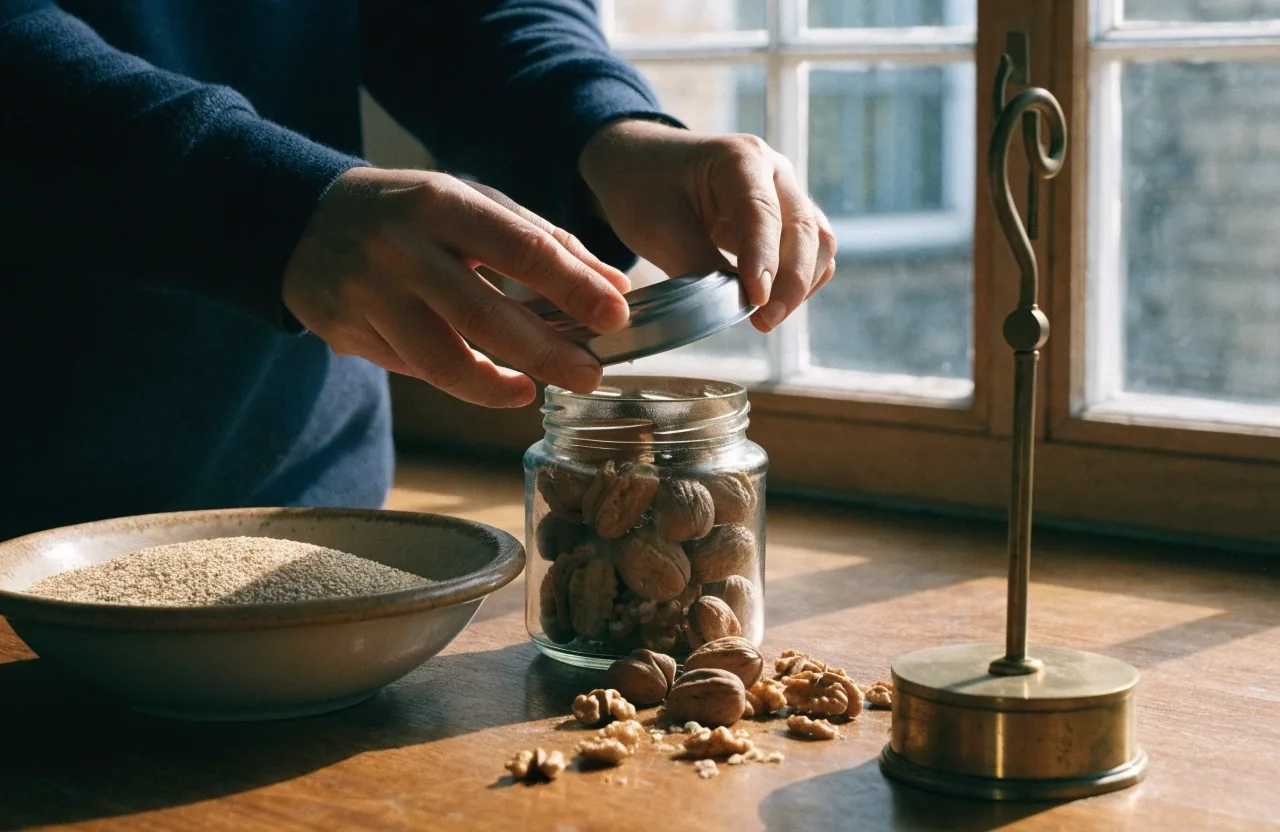
Nutritionist's workbench seen from above with jars of nuts and grains, a brass scale, and plain pencils on oak
01
02
03
04
05
06
07
08
09
10
11
12

About the Lab

Who writes the guidance here

A small editorial project in Tallinn. We read the nutrition, sleep and ageing literature, then write guidance for adults in Estonia who want to feel better for longer.

Where we start

What we actually do

We publish guides on everyday nutrition, sleep and recovery, energy and fatigue, and the habits linked to healthy longevity. Each guide starts from a reader question, not a keyword list. Questions like what a healthy daily menu looks like here are better briefs than a generic list of tips, because the useful answer involves local food, real portions, and a schedule that survives a busy week.

That means we write the way a person cooks: what to buy in an Estonian shop in October, how much of it belongs on a plate, and when in the day it fits. When a topic can only be answered with lab results or a diagnosis, it is not our page to write. We hand that over to your doctor and stay in the lane of everyday food, sleep and movement habits.

The guides we keep

  • Everyday nutrition, built around Estonian staples
  • Sleep and recovery, including light and timing
  • Energy and fatigue prevention through the day
  • Longevity habits that hold up over years, not weeks

Four series, rewritten as the national guidance and the research move on.

Where the material comes from

Our reference points are public-health sources: Estonia's Country Health Profile, the OECD's Health at a Glance Europe work on healthy longevity, EU-level reports on nutrition and active ageing, and Estonia's own food-based dietary guidelines. When a guide mentions berries, nuts or whole grains, it is because those foods appear in official guidance, not because they trended online.

None of those documents were written for a kitchen. Our work is the translation step.

Years lived, and years lived without disability, Estonia
Life expectancy, 2000
71.1
Life expectancy, 2020
78.6
Disability-free years, holding roughly steady since 2008
54–57

That contrast is the whole editorial argument. We gained years of life in twenty years, and almost none of them free of disability. Nutrition guidance that only talks about living longer is answering half the question, so we write toward the second half as well.

How we choose

How we pick a topic

A topic earns a page when it is both common and actionable. More than half of Estonian adults aged 16 to 64 were overweight or obese in 2020, so weight management and food swaps stay on the list. Nearly one in five adults is obese, among the higher rates in the EU.

That is why we write about portion habits, sugary drinks and the everyday rhythm of meals rather than rare superfoods. If a subject is interesting but has no realistic daily action attached, we either skip it or treat it as research reading for ourselves.

01

Does a reader actually ask this?

Reader questions, messages and the seasonal gaps in our own kitchen set the list.

02

Is the action realistic on a normal week?

If the advice needs a different job, a second kitchen or a private cook, it is not guidance yet.

03

Is there public guidance behind it?

National dietary guidelines, EU and OECD public-health reports, and review-level findings come first.

04

Can we state the limits as clearly as the advice?

If the evidence is thin or the advice suits only some readers, the page says so up front.

05

Can we show it on a plate?

Every guide has to end in a shopping list, a portion or a week of meals a reader can picture.

06

Will it still be true in three years?

We prefer the slow findings over the loud ones, and we say which parts are likely to move.

Evidence, without the slogan

We use the phrase evidence-informed sparingly, because it is often decoration. What it means here is narrower: public-health guidance and review-level findings come before single studies, and we say when something is uncertain.

What we take as a source

  • National food-based dietary guidelines and the health profile for Estonia
  • EU and OECD public-health reports on nutrition and active ageing
  • Review-level findings that pool many studies rather than one headline result
  • Practical cooking and portion information that a reader can check at home
What stays off the page

  • Single small studies presented as settled advice
  • Dosages, supplement routines or anything that reads like a prescription
  • Advice to stop or change medication, or to skip a medical appointment
  • Invented ratings, testimonials and before-and-after stories

A worked example. Intermittent fasting appears in healthy-ageing reviews alongside caloric restriction and exercise, so it is a legitimate research topic in the longevity series. It is also hard to stick to, and unsuitable for some people. Both facts belong in the same article, in that order, so a reader can judge whether it fits their week.

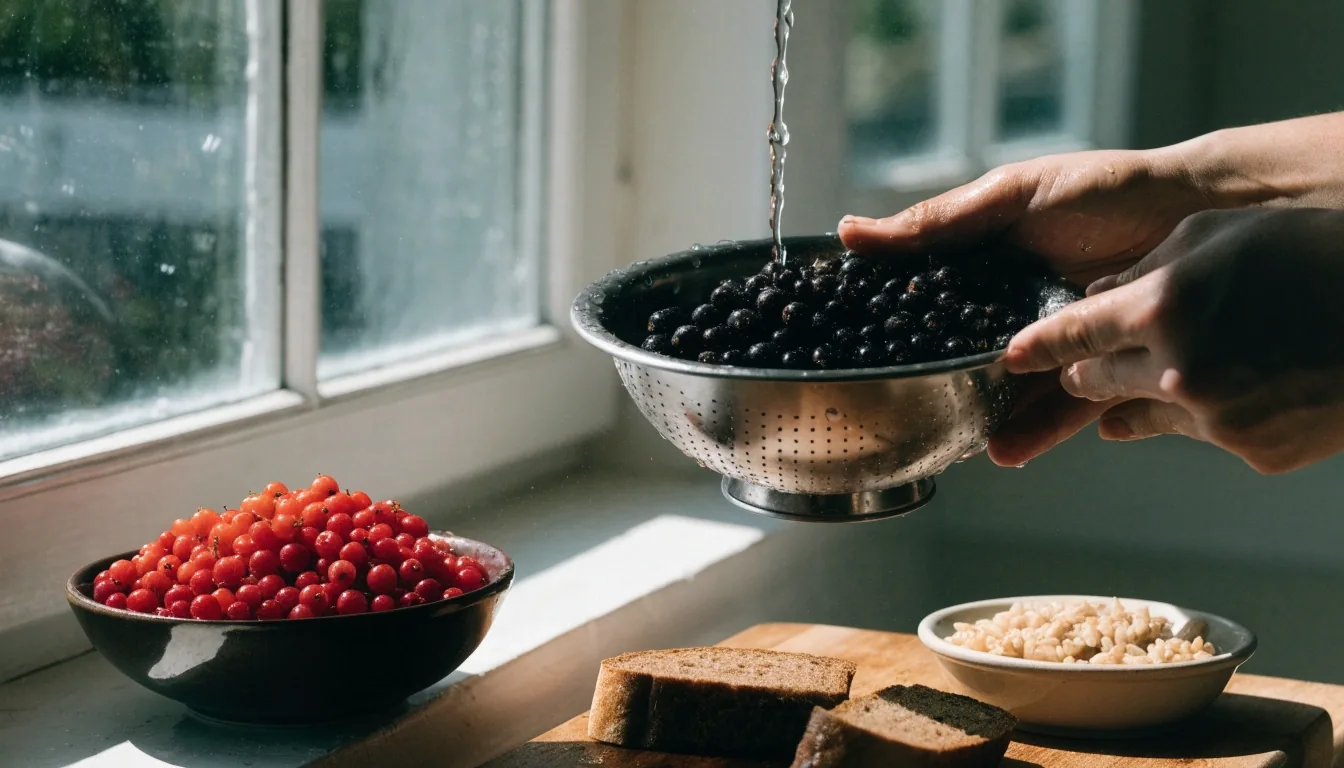
Everyday Estonian table at midday with berries, rye bread and barley in plain bowls

Local detail, deliberately

Advice you can picture in your own kitchen

Generic wellness writing could be published anywhere. Ours mentions Estonian seasons, the berries and whole grains named in national guidance, and the 150 to 300 minutes of moderate-intensity activity per week recommended for older adults in European policy. That specificity is the point.

It also means a guide has a season. A piece on berries belongs to late summer and early autumn, when they are cheap and good; a piece on soups and root vegetables belongs to January, when the motivation to cook is thin. We would rather publish on time than publish on a schedule.

Standards

What we will not do

We do not sell supplements or run detox programmes, and we do not promise outcomes. We do not write in a diagnostic voice, and we do not tell anyone to stop medication or skip a doctor's appointment. If we can't support a claim with a public source or a clearly stated practical limit, it doesn't go on the site.

Who this is written for

Adults in Estonia, roughly from their late thirties onward, who want steady energy, better sleep and a lower risk profile as they age. It is also for people cooking for a household who need meals that work for everyone at the table.

We assume no background in nutrition science. We do assume you would rather read a clear explanation than a list of banned foods, so the guides explain why something helps before they ask you to change anything.

Contact the lab

How corrections work

01

We check the claim against a public source

If the source has changed since publication, the guide is the thing that is wrong, not the reader.

Send a correction
02

We fix the page and note the change

Nothing gets quietly deleted. The corrected guide carries a short line saying what was adjusted and when.

Edited in place
03

We read every message

Corrections from readers who know their own kitchen, shop or region are the most useful ones we get.

Write to us

The lab is a small team, so a correction is not a ticket in a queue. It goes to the person who wrote the guide, and it usually changes the page the same week.

Questions we get about the lab

Do you offer personal consultations or meal plans?

No. The lab is an editorial project, not a clinic, so nothing here is a personal plan for one reader. If you need advice matched to your own test results or medication, that is a conversation with your doctor or a registered dietitian.

Are the guides written for people with a diagnosis?

They are written for adults who want general guidance on everyday eating, sleep and movement. If you live with a condition that changes what you can eat, treat our pages as background reading and take the practical decisions to your clinician.

Why do you keep citing Estonian and EU reports?

Because they describe the population this site is written for. A guideline that fits Estonia's food culture and health profile is more useful to a reader in Tallinn than a study run on a different diet in a different climate.

Can I republish or quote a guide?

Short quotes with a link back to the page are welcome. For anything longer, write to us first so we can point you to the public source behind the claim rather than the summary on our page.

How often are the older guides reviewed?

Pages tied to national or EU guidance are checked when that guidance is updated, and others are read again at least once a year. If a review changes anything, the note on the page tells you what moved.

Where to go next

Start with the guide closest to your week

Four series cover the ground this lab writes about. Pick the one that matches the question you actually have, and send a correction any time something does not match what you see in your own kitchen.

Sleep & Optimal Health Path, Lossi tn 22, 10117 Tallinn. Monday to Friday, 9:00 AM – 6:00 PM. Reach us at [email protected] or +372 435 6128.

Guidance on this site is general education for adults in Estonia. It is not a diagnosis, a treatment plan or a substitute for care from your own doctor.